











Every great music nation has a sound. America has hip hop. Jamaica has dancehall and reggae. Nigeria has become synonymous with Afrobeats.
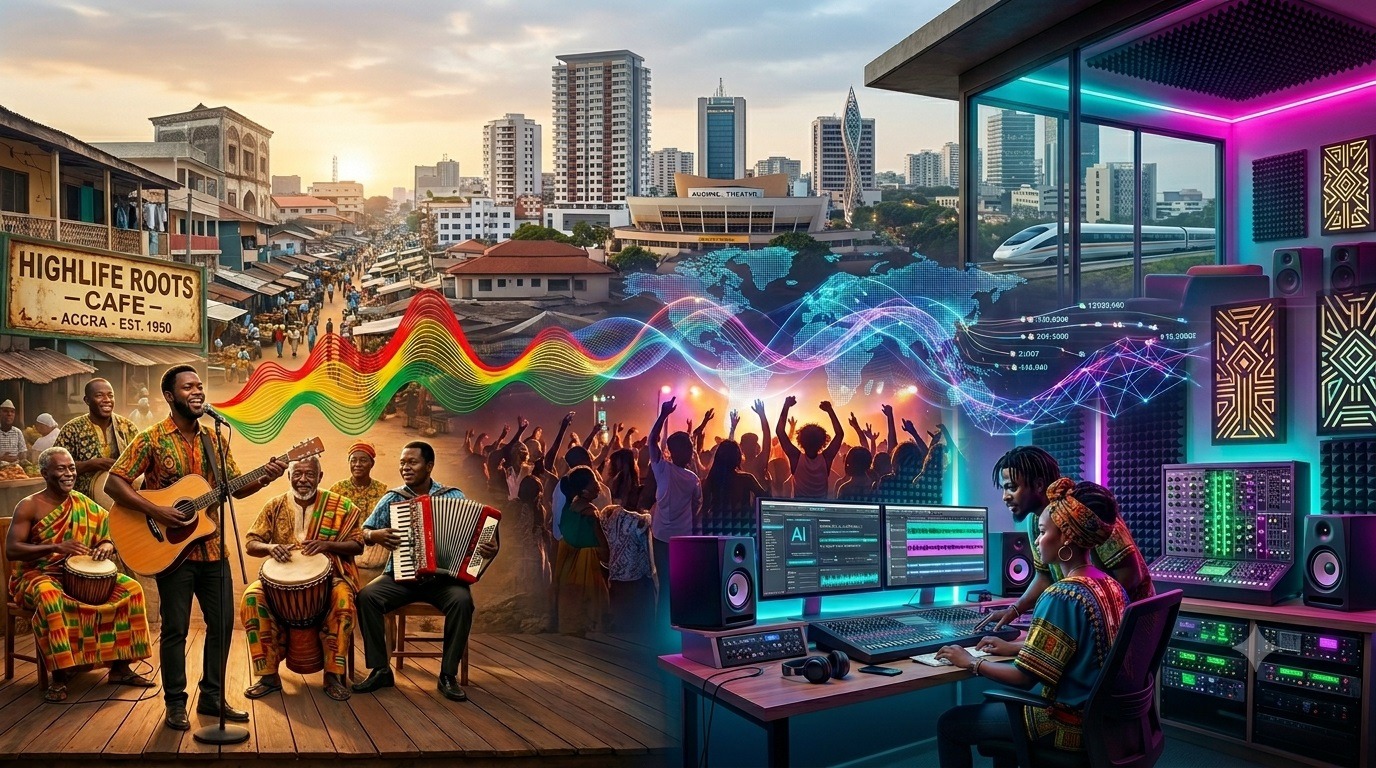
But before Afrobeats became the world’s favourite African export, before streaming turned Accra into a global listening room, Ghanaian producers were already busy rewriting the sonic rulebook.
The story of modern African music cannot be told without Ghana’s producers. They are the architects who built bridges between traditional highlife, hip hop, dancehall, gospel, electronic music and the global Afropop movement that dominates charts today.
This is their story.
When Hiplife Changed Everything
In the early 1990s, Ghanaian music stood at a crossroads.
Highlife remained king, but a new generation was listening to hip hop from New York, reggae from Jamaica and pop from Europe. Something had to give.
Then came hiplife.
Most conversations rightly celebrate Reggie Rockstone as the godfather of the movement, but hiplife was not built by artists alone. Behind the scenes stood producers and engineers who translated a radical idea into sound.
Among the most influential were Panji Anoff and Zapp Mallet. Together with other studio innovators of the era, they fused highlife melodies, Ghanaian rhythms and hip hop production techniques into something uniquely Ghanaian. Zapp Mallet is widely recognised as one of the pioneering architects of hiplife and played a crucial role in shaping the earliest recordings that defined the genre.
What made the new sound revolutionary was not simply the rapping.
It was the production.
Traditional highlife guitars suddenly sat beside programmed drums. Local percussion met sampled loops. Twi, Ga and pidgin flowed over beats inspired by both Accra and New York.
For the first time, Ghanaian music sounded urban, youthful and globally aware without losing its identity.
The old guard took notice.
Highlife was no longer just evolving through musicians. Producers had become cultural engineers.
The Appietus Era and the Rise of the Hit Factory
If hiplife introduced a new language, Appietus helped make it the national dialect.
By the early 2000s, Ghanaian music entered a golden production age. Studios became laboratories. Producers became stars.
Few names towered larger than Appiah Dankwah, popularly known as Appietus.
His signature tag, “Appietus In The Mix”, became a national stamp of approval. Whether it was highlife, hiplife, gospel or dancehall, Appietus had a way of making records leap out of speakers. His productions helped define the sound of an entire generation.
Around him emerged an elite class of producers who transformed Ghana into West Africa’s most exciting sonic workshop.
Jay Q introduced the famous “jama” sound into mainstream hiplife and helped create records that dominated clubs across the sub-region.
Hammer of The Last Two crafted darker, cinematic productions that elevated artists such as Obrafour, Tinny and Kwaw Kese into cultural icons.
Richie Mensah would later blend polished pop songwriting with Ghanaian sensibilities and build Lynx Entertainment into one of the most influential music institutions in modern Ghana.
Kaywa became a master of crossover records, effortlessly navigating gospel, highlife and Afropop.
KillBeatz emerged with a fresh understanding of melody and groove that would later help shape continental hits.
Together, these producers transformed Ghana from a music market into a music powerhouse.
When Nigeria Came Knocking
One of the least discussed chapters in African music history is Ghana’s influence on the sonic foundations of modern Afrobeats.
Long before Lagos became the commercial capital of the movement, many Nigerian artists looked to Ghana for production ideas, studio expertise and fresh sounds.
During the 2000s and early 2010s, Ghanaian producers were creating records that travelled effortlessly across West Africa.
The bounce of hiplife, the melodic instincts of highlife, the energy of dancehall and the polish of contemporary pop.
It was a formula that worked.
Artists including Faze, 2Baba, Wizkid, Burna Boy and several others either collaborated directly with Ghanaian producers or were influenced by production styles emerging from Accra’s studios. Producers such as GuiltyBeatz and Juls would later become key contributors to records involving both Ghanaian and Nigerian stars.
The result was a two-way cultural exchange.
Nigeria supplied scale.
Ghana supplied innovation.
Together they helped shape what the world would eventually know as Afrobeats.
The genre may now be marketed globally through a broader African identity, but many of its production techniques, melodic structures and rhythmic sensibilities carry unmistakable Ghanaian fingerprints.
The Digital Generation Takes Over
Then came streaming.
Suddenly, geography mattered less.
A producer in Accra could influence playlists in London, New York and Johannesburg without leaving the studio.
A new generation emerged.
And they were fearless.
GuiltyBeatz became one of the most globally recognised Ghanaian producers, working across borders and contributing to projects involving Beyoncé, Mr Eazi, Wizkid, Stonebwoy and many others.
Juls developed an instantly recognisable sound that blended highlife warmth, jazz textures and Afrobeats rhythm. His work with Burna Boy, Mr Eazi and several leading African acts helped define a more relaxed and sophisticated era of Afrobeats.
Nektunez demonstrated the power of digital virality when his Ameno Amapiano remix became a global phenomenon, generating billions of views and introducing another Ghanaian producer to worldwide audiences.
Then there is MOG Beatz.
Few producers have influenced contemporary Ghanaian music as consistently as MOG. His fingerprints can be found across some of the country’s biggest records, proving that commercial success and sonic innovation can coexist.
Alongside them stand Possigee, Sammy Soso, Team Salut, Ugly & Tough, Beatz Vampire, Ghanaian Stallion, Apya and many others who continue to push boundaries across Afrobeats, drill, gospel, dancehall, alternative music and electronic fusion.
These producers are not simply making beats.
They are exporting culture.
What Does the Future Sound Like?
The future of Ghanaian music will not be won by copying trends.
It will be won by creating them.
The country’s greatest musical moments have always emerged when producers leaned into Ghanaian identity rather than running from it.
Highlife was original. Hiplife was original. Azonto was original. Asakaa was original.
The next global breakthrough will likely emerge from the same place.
A fearless producer experimenting with local rhythms, local languages and modern technology.
Artificial intelligence, immersive audio, virtual performances and global collaboration will redefine music creation over the next decade. The producers best positioned to win will be those who combine innovation with authenticity.
Fortunately, Ghana has never lacked innovators.
Give the Producers Their Flowers
Artists may occupy the spotlight, but producers build the stage.
Without Panji Anoff, Zapp Mallet, Appietus, Jay Q, Hammer, Richie Mensah, Kaywa and KillBeatz, modern Ghanaian music would look very different.
Without GuiltyBeatz, Juls, MOG Beatz, Nektunez, Possigee, Sammy Soso, Team Salut, Ugly & Tough, Beatz Vampire, Ghanaian Stallion and Apya, Ghana’s place in today’s global music conversation would be significantly smaller.
These are not just beat makers.
They are historians, innovators, cultural diplomats and architects of Africa’s soundtrack.
The sound of Ghana in the digital age is still being written.
And if history is any guide, the next chapter will once again begin in a studio somewhere in Accra, Kumasi, Takoradi or London, where a Ghanaian producer is quietly creating tomorrow’s global sound.
When that moment comes, the world will dance to it.
Just as it always has.
Written by Richmond Adu-Poku