
There are two types of music listeners. The first hears a song, falls in love instantly, throws it into a playlist called “Late Night Vibes” and never checks who made it. The second disappears for 47 minutes with headphones on, ignores calls, rejects food, stares dramatically at the ceiling and returns emotionally altered because an album “changed their life.”

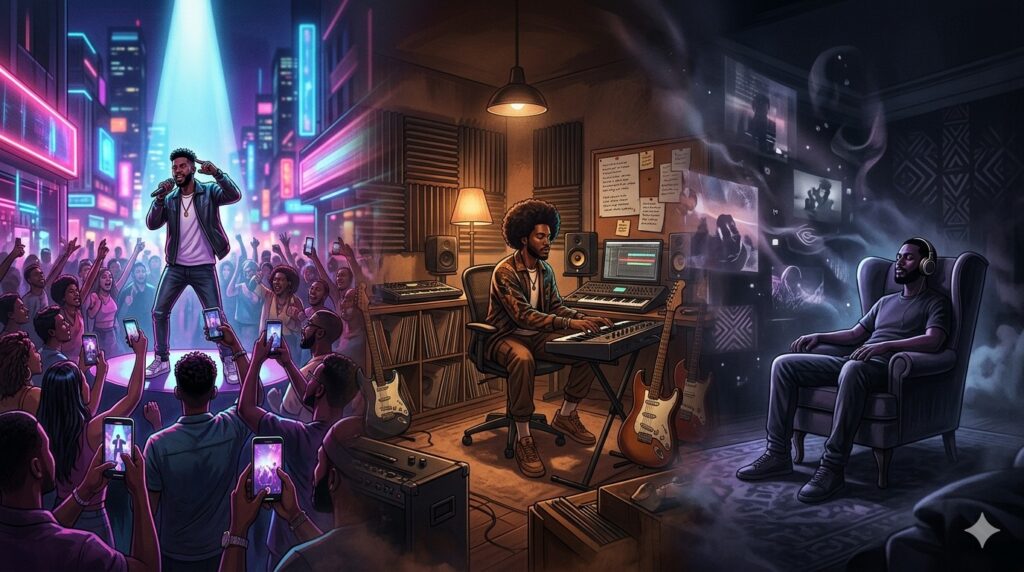
Welcome to modern music consumption, where singles are speed dating, EPs are “let’s see where this goes,” and albums are full commitment with matching outfits and emotional consequences. Not every song needs fireworks and a grand entrance. Sometimes a track just needs to burst into the room, cause chaos and disappear before sunrise.
The Single: Music’s Attention Magnet
A single is one song standing alone and demanding attention. In the streaming era, singles run the game. They are fast, digestible and built for audiences juggling TikTok, memes and nonstop notifications. Platforms reward consistency, and singles keep artistes visible. Think of singles like social media thirst traps. One great post gets attention. Consistent posts keep people talking. Disappear for two years “working on an album” and the internet replaces you before your intro track loads.
That is why many artistes release singles every four to eight weeks. Every drop is another chance to land on playlists like Release Radar or Discover Weekly. Every release becomes a fresh shot at visibility. Singles are also cheaper and easier to market. Instead of stretching a budget across 14 songs and hoping listeners survive track eight, artistes can focus on one powerful record.
One song. One visual. One message. One moment. Done.
Singles also give artistes freedom to experiment. Today can be highlife. Tomorrow afrobeats. Next week emotional acoustic heartbreak music. No pressure. No long-term commitment.
A single simply asks: “Do you like this version of me?” That flexibility matters, especially for developing artistes still figuring out their sound and audience. Singles allow trial and error without risking an entire project. In simple terms, singles chase attention. And in today’s music industry, attention is currency.
The EP: The Smart Middle Ground
Then comes the EP, music’s middle child. Not quite an album. Definitely more than “just vibes.” An EP, short for Extended Play, usually contains three to five songs and runs under 30 minutes. It is long enough to show depth but short enough not to exhaust listeners.
This is where artistes start becoming intentional. A single says, “Notice me.” An EP says, “Understand me a little.” EPs are perfect for emerging artistes building identity. They create room to explore themes, test cohesion and showcase range without the pressure of carrying a full-length album.
Think of an EP as a movie trailer with emotional intelligence. It introduces listeners to your world without demanding too much from them. That balance is why EPs work so well today. Modern audiences often snack on music instead of sitting through hour-long projects. Attention spans are shorter, competition is louder and listeners want experiences they can finish before the next distraction arrives.
An EP respects that reality. It also gives artistes creative freedom without the emotional and financial exhaustion of making an album. You can build a focused sound, tell a compact story and leave people wanting more.
Many great careers started with strong EPs because they feel manageable for both artistes and listeners. Not too short. Not too long. Just enough substance to make people care.
The Album: The Full Experience
Then we arrive at the heavyweight champion. The album. The cinematic universe. The “please listen in order” experience.
An album, also called an LP, usually contains seven or more tracks and runs over 30 minutes. But an album is more than runtime. A real album is a statement. This is where artistes stop chasing attention and start building legacy.
With albums, storytelling matters. Sequencing matters. Visual identity matters. Even silence between tracks suddenly feels intentional. Albums create deeper emotional connections because they require commitment. You do not casually experience a great album. You enter it.
A strong album can feel like reading someone’s diary during heartbreak season. And when done right, albums outlive trends.
Singles may dominate playlists, but albums dominate history. People remember eras. Bodies of work. Musical worlds.
That is why award shows, critics and festival organisers often place extra value on albums. A strong album signals artistic maturity. It proves an artiste can sustain quality beyond one viral hit. Albums also create opportunities beyond streaming. Vinyls, CDs, merchandise, tours and visual campaigns all thrive around albums because fans love immersive experiences.
In simple terms: Singles make noise. Albums make monuments.
The Problem With Many Albums
Here is where things fall apart. Too many artistes release albums that sound like abandoned group projects. No direction. No cohesion. No identity.
One heartbreak song sits beside one club anthem, then a motivational sermon, then a random reggae experiment nobody asked for. That is not an album. That is a confused playlist wearing expensive cover art.
A proper album needs purpose. Every track should feel connected emotionally, sonically or conceptually. Strong albums require: A clear concept, Cohesive storytelling, Defined visualst, A target audience, Smart rollout strategy and Songs that actually belong together. Every track must earn its place.
Listeners can tell when an album is intentional. And they can definitely tell when it is recycled hard drive content packaged as “art.”
Attention, Immersion or Legacy?
So what should artistes release? That is the million-stream question, and the answer is simple: it depends. For developing artistes, consistency matters more than dramatic speeches about a “debut masterpiece.” Singles help build momentum, feed the algorithms, test sounds and keep artistes in conversations.
The modern industry no longer requires albums to build a fanbase, and dropping one too early can backfire if listeners are not ready for a 40-minute emotional journey. Singles are the gym sessions of music careers: repetitive, necessary and occasionally painful.
But once an artiste has a loyal audience, a strong concept and something meaningful to say, that is when albums make sense. Not because of pressure or industry expectations, but because some ideas are simply too big for one song. Fans should care because music formats shape the listening experience.
Singles are designed to grab attention instantly, EPs invite deeper immersion and albums create emotional worlds listeners attach themselves to. Music is rarely random. Singles chase attention, EPs build curiosity and albums build identity. Once listeners understand that, they stop hearing music as background noise and start appreciating it as intentional design.
Final Track
There is no superior format. Sometimes one explosive song is enough to hijack the summer. Sometimes five tracks perfectly introduce a new era. And sometimes only an album can fully hold everything an artiste wants to say.
A quickie has its place. So does the full session.The real genius is knowing which one your music deserves.
Written by Richmond Adu-Poku