
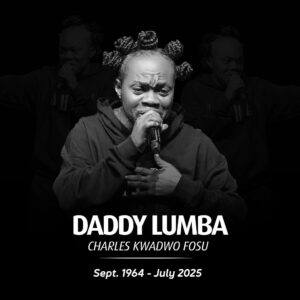

In a candid conversation on Joy FM’s Super Morning Show on Monday, July 28, Okraku-Mantey described the iconic musician as “eccentric” and “elusive,” noting that even those closest to him struggled to grasp the full extent of his personality.
“I want to see that person who can confidently say they truly knew Lumba,” Okraku-Mantey stated. “He was the love-me, hate-me type. He could be extremely pleasant but equally tough when he needed to be.”
While the public often celebrates Daddy Lumba for his timeless hits and trailblazing presence in Ghana’s music industry, Okraku-Mantey hinted at a deeper, more complex individual—one whose character defied easy categorization. “People who worked with him might be listening now and wondering, ‘Is this the same Lumba they’re praising?’ Because he could be difficult, but that was part of his brilliance,” he said.
He recalled a memorable quote the singer used on his own radio station, DL FM: “Makra mo, abia na mu ehu me biom,” which translates as “Goodbye, perhaps you may never see me again.” The phrase, which appeared on Lumba’s Biribi Gyegye Wo album, seemed to capture the mystery that defined him both on and off stage.
Reflecting on Lumba’s artistry, Okraku-Mantey explained that his eccentricities were not flaws but traits common among gifted performers. “You need that unique mindset to rise to the top the way Lumba did. Most great performers are difficult to understand—he was no exception.”
The beloved musician, whose real name was Charles Kwadwo Fosu, passed away on Saturday, July 26, at the Bank Hospital in Accra after a short illness. His death has been met with widespread mourning, marking the end of an era in Ghanaian highlife music.